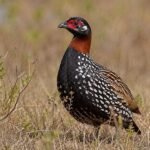
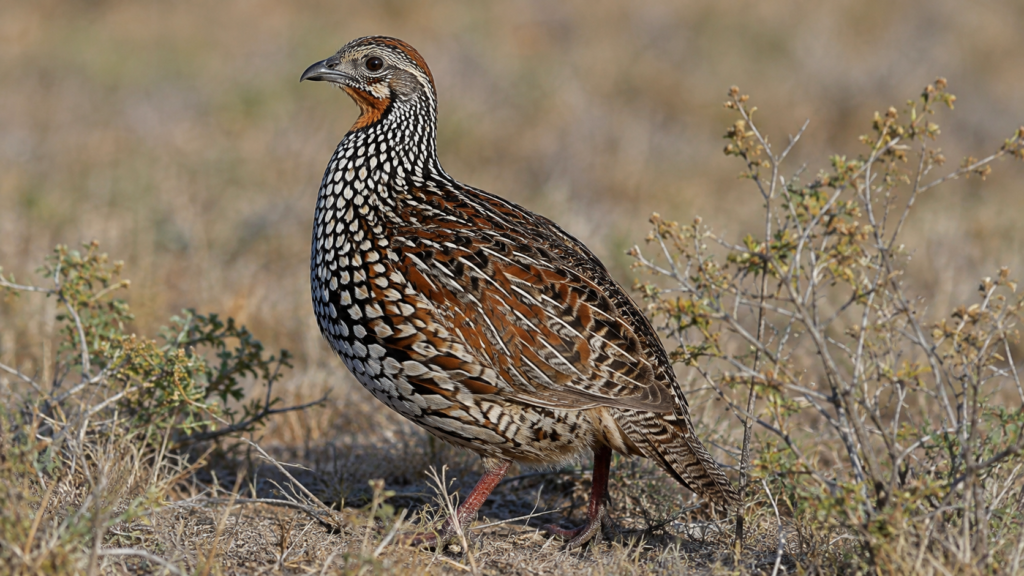

The Chinese Francolin is a ground-living game bird from the pheasant family. Its scientific name is Francolinus pintadeanus. It is also called the Burmese Francolin in some places. This bird is known for its spotted body, strong legs, and loud call. It looks a little like a small wild chicken, but it is not the same as a domestic chicken.
The Chinese Francolin is mainly found in parts of South and Southeast Asia. Its range includes areas from northeast India and Myanmar through southern China, Indochina, Hainan, and nearby regions. It often lives in dry scrub, open woodland, grassland, farms, and hilly areas with cover.
For pet owners, this is important to know: the Chinese Francolin is not a normal house pet. It is a wild game bird. It needs space, legal paperwork, safe outdoor housing, and expert care. It should never be taken from the wild.
Important Chinese Francolin Facts
The Chinese Francolin belongs to the order Galliformes and the family Phasianidae, the same broad family group as pheasants and partridges. Oiseaux.net lists the bird at about 34 cm long, with an average weight around 310 g.
It is a shy bird. It spends most of its time on the ground. When scared, it often runs into cover instead of flying far. Males can call from rocks, hilltops, or open perches. eBird describes the male call as a metallic series of notes and says singing males often stand in exposed places.
The bird’s colours help it hide. Males often show white cheeks, rufous colour on the crown, shoulders, and vent, and fine black-and-white scaling. Females are usually browner and less bright.
Types and Subspecies
There are no pet “breeds” of Chinese Francolin like there are dog breeds. But there are recognised subspecies. The two commonly listed subspecies are:
-
Francolinus pintadeanus pintadeanus — found in southeastern China and Hainan.
-
Francolinus pintadeanus phayrei — found from northeast India to southern China and Indochina.
Avibase and Oiseaux.net both list these two subspecies. For a pet owner, the subspecies usually matters less than legal source, health, housing, and correct care. A responsible owner should only keep a legally bred or legally held bird.
Is the Chinese Francolin a Good Pet?
The Chinese Francolin is not a good pet for most beginners. It is not a cuddly bird. It does not enjoy handling like some tame parrots or budgies. It is better suited to experienced bird keepers, aviary owners, wildlife centres, or licensed keepers.
In the UK, wild birds have legal protection. GOV.UK says you must not keep a wild bird, egg, or nest unless you can prove it was taken or killed legally. It also says you may need a licence and should keep proof such as records or a receipt.
If you keep poultry or other captive birds in England or Wales, GOV.UK says you must register within one month. This rule helps protect captive birds from disease.
Benefits of Keeping Chinese Francolins
A Chinese Francolin can be interesting for the right keeper. It has natural behaviour that many bird lovers enjoy watching. It walks, scratches, calls, hides, and forages like a wild ground bird.
Possible benefits include:
-
It is beautiful in a natural aviary.
-
It can be interesting for educational bird collections.
-
It may help people learn about Asian game birds.
-
It shows natural ground-foraging behaviour.
-
It is active during the day.
-
It can live well in a safe, roomy, natural-style enclosure.
But these benefits only happen when the bird is kept legally, safely, and humanely.
Problems and Challenges
The Chinese Francolin also has many challenges. It needs more space than a cage bird. It needs dry ground, hiding places, clean bedding, protection from predators, and good disease control.
Common problems include stress, injuries from panic flight, poor diet, dirty ground, parasites, and weather exposure. It may also be noisy during calling periods. It is not suitable for a small indoor cage.
This bird is also a flight risk. If it escapes, it may not survive. It may also create legal or ecological problems depending on the country.
Food and Nutrition
In the wild, Chinese Francolins eat a mixed diet. They feed on insects, seeds, grains, small fruits, and plant matter. BirdLookUp describes the species as omnivorous, with insects such as beetles, ants, and termites forming an important part of the diet, especially during breeding periods.
For captive care, the diet should be planned with an avian vet or experienced game bird keeper. A basic diet may include:
-
Quality game bird pellets or crumbs
-
Small seeds and grains in controlled amounts
-
Fresh greens
-
Safe vegetables
-
Live or dried insects
-
Clean grit for digestion
-
Fresh water every day
-
Calcium support when needed
Do not feed only seed. Seed alone is not a balanced diet. Also avoid salty food, mouldy food, chocolate, avocado, alcohol, caffeine, and spoiled fruit.
Housing and Space Needs
A Chinese Francolin needs a secure outdoor aviary or game bird pen. The enclosure should be large enough for walking, scratching, dust bathing, hiding, and short bursts of movement. It should not be a tiny cage.
Good housing should include:
-
Strong wire mesh
-
A predator-proof roof or covered area
-
Dry ground
-
Drainage
-
Hiding plants or brush
-
Low shelters
-
Dust-bathing space
-
Clean feeding area
-
Safe night shelter
-
Double-door entry to prevent escape
The bird should be protected from foxes, cats, rats, dogs, birds of prey, and bad weather. Wet, dirty ground can cause foot and health problems.
Care and Grooming
Chinese Francolins do not need grooming like long-haired pets. They care for their feathers by preening and dust bathing. Your job is to give them the right space and clean conditions.
Keep the enclosure dry and clean. Remove old food daily. Change water daily. Check the bird’s feet, feathers, eyes, droppings, and movement. If the bird is limping, puffed up, weak, or not eating, contact an avian vet.
Dust bathing is important. A dry dust area helps birds clean feathers and may reduce external parasites. Do not wash the bird unless a vet tells you to.
Health and Safety
Health care is one of the most important parts of Chinese Francolin ownership. New birds should be quarantined before joining other birds. This helps stop disease from spreading.
Watch for warning signs such as:
-
Eating less
-
Drinking much more or less
-
Watery droppings
-
Swollen eyes
-
Breathing noise
-
Weakness
-
Limping
-
Feather loss
-
Sitting alone
-
Sudden death
Bird flu is a serious disease risk for captive birds. GOV.UK lists warning signs such as sudden death, swollen head, runny eyes, lack of coordination, eating less, breathing problems, and watery droppings. Suspected bird flu in poultry or other captive birds must be reported.
Legal and Ethical Safety
Never catch a Chinese Francolin from the wild. This is harmful and may be illegal. Always check your local laws before buying or keeping one.
In the UK, GOV.UK states that pet owners must give animals proper care. This includes a proper diet, fresh water, suitable housing, normal behaviour, and protection from illness or injury.
Ethical ownership means asking three questions before getting this bird:
-
Can I keep it legally?
-
Can I give it enough space?
-
Can I find an avian vet who understands game birds?
If the answer is no, choose a more suitable pet bird.
Common Mistakes to Avoid
Many problems happen because people treat wild game birds like small cage birds. This is a mistake.
Avoid these common mistakes:
-
Keeping the bird in a small cage
-
Buying without checking the law
-
Taking a bird from the wild
-
Feeding only seed
-
Keeping birds on wet ground
-
Mixing new birds without quarantine
-
Ignoring predator protection
-
Handling the bird too much
-
Forgetting bird registration rules
-
Not calling a vet when the bird looks ill
A Chinese Francolin needs quiet, space, safety, and routine. Too much handling can cause stress.
Practical Tips for Owners
Keep the enclosure natural but safe. Use low shrubs, dry grass, logs, and hiding corners. Place food in a clean area. Keep water raised slightly so dirt does not get into it.
Check fencing often. Francolins can be quick when scared. A double-door system is a smart idea. It stops escape when you enter the aviary.
Keep a simple care record. Write down food, cleaning days, vet visits, new birds, egg laying, illness, and behaviour changes. This helps you spot problems early.
Conclusion
The Chinese Francolin is a beautiful and interesting ground bird. It has bold markings, strong legs, and natural game bird behaviour. But it is not a simple pet. It needs legal ownership, a secure outdoor aviary, a balanced diet, clean ground, protection from disease, and careful handling.
For most people, it is better to enjoy the Chinese Francolin through birdwatching, photos, and education. For experienced keepers, it can be cared for well only when its wild needs are respected. A healthy Chinese Francolin needs space, safety, good food, and responsible human care.
FAQs
1. Is the Chinese Francolin a pet bird?
It can be kept only by suitable and legal keepers, but it is not a normal pet bird. It is a wild game bird and needs expert care.
2. Can I keep a Chinese Francolin indoors?
No, it is not suitable for a small indoor cage. It needs a safe outdoor aviary or large game bird enclosure.
3. What does a Chinese Francolin eat?
It eats insects, seeds, grains, fruits, and plant matter. In captivity, it needs a balanced game bird diet, fresh greens, insects, grit, and clean water.
4. Is the Chinese Francolin endangered?
The Chinese Francolin is listed as Least Concern on conservation sources such as Oiseaux.net and BirdLife-linked data. Local numbers can still be affected by hunting and habitat loss.
5. Does a Chinese Francolin fly?
Yes, but it usually spends most of its time on the ground. When scared, it may run or fly a short distance.
6. Are Chinese Francolins noisy?
Males can be loud during calling times. Their call is one reason birdwatchers notice them, but it may be a problem in a small garden.
7. What is the biggest care mistake?
The biggest mistake is getting one without checking the law, space needs, and vet care first. This bird is not a beginner pet.