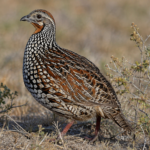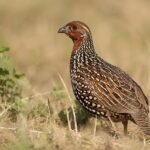
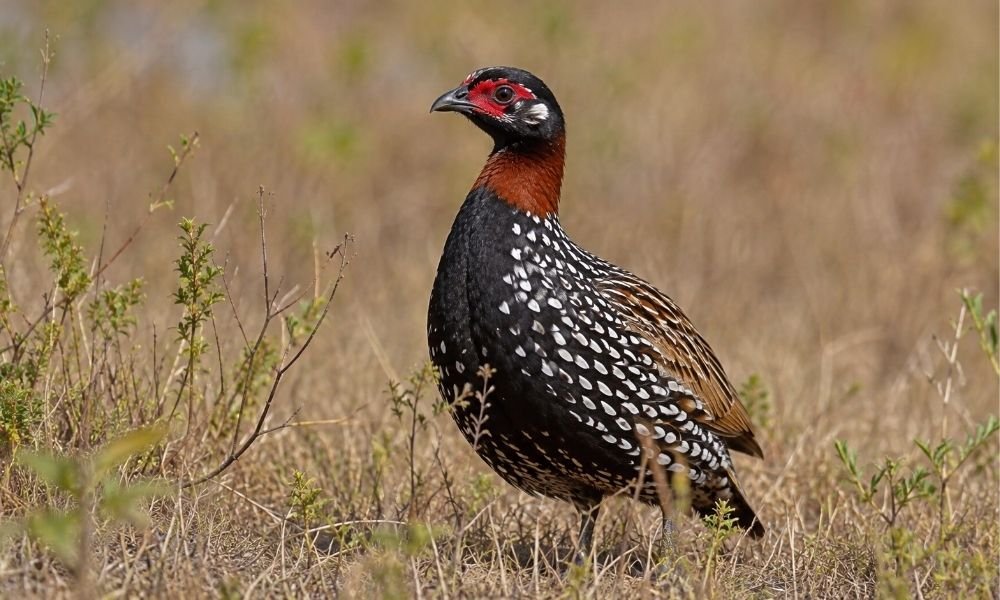

The Black Francolin is a small game bird. Its scientific name is Francolinus francolinus. It belongs to the pheasant family, called Phasianidae. It is also known as the black partridge in some places. Cornell Lab lists it in the order Galliformes and the family Phasianidae.
This bird is famous for its strong call, shy nature, and beautiful feathers. The male looks very bright. He has black, white, brown, and chestnut colours. The female is softer in colour. She is mostly golden brown with dark markings. Cornell describes the male as black and chestnut with white spots, while the female is rich golden-brown with black and white marks.
A Black Francolin is not like a normal pet chicken. It is a wild-style ground bird. It needs space, cover, safety, and quiet care. It is best for people who already know how to keep aviary birds or game birds.
Important Black Francolin Facts
The Black Francolin lives mostly on the ground. In the wild, it hides in grass, shrubs, crop fields, and open land. Cornell says it often lives in grasslands, shrublands, croplands, and areas near rivers or irrigation canals.
This bird does not like too much handling. It can get scared fast. A calm, safe aviary is better than a small cage. It likes to walk, scratch the soil, hide under plants, and rest in covered areas.
Quick facts:
-
Common name: Black Francolin
-
Scientific name: Francolinus francolinus
-
Family: Phasianidae
-
Bird type: Game bird
-
Best home: Outdoor aviary
-
Diet type: Omnivore
-
Main food: Seeds, grains, greens, and insects
-
Pet level: Best for experienced keepers
-
Nature: Shy, active, and alert
-
Conservation status: Least Concern worldwide
The Black Francolin is listed as Least Concern by the IUCN/BirdLife assessment, which means it is not classed as globally threatened right now. Cornell also reports a global estimate of about 300,000 to 850,000 mature birds.
Is a Black Francolin a Good Pet?
A Black Francolin can be kept by the right owner, but it is not a simple pet. It is not cuddly like a cat. It is not easy like a budgie. It is a bird that needs outdoor space and careful care.
It may be a good choice if you have a secure aviary, quiet land, and time to check the bird every day. It may not be a good choice if you live in a flat, have loud pets, or want a bird you can hold often.
Before buying one, check your local laws. In the UK, animal keepers have a duty to give animals a suitable home, suitable diet, normal behaviour space, proper housing with or away from other animals, and protection from pain, injury, suffering, and disease.
Types and Breeds of Black Francolin
There are no pet “breeds” of Black Francolin like dog breeds. But there are natural subspecies in different areas. Some sources list subspecies such as F. f. francolinus, F. f. arabistanicus, F. f. bogdanovi, F. f. henrici, F. f. asiae, and F. f. melanonotus. Research on Asian francolins also notes six known morphological subspecies.
For a pet owner, this means one simple thing. Buy only from a trusted and legal breeder. Do not take wild birds. Do not buy birds with unclear papers. A captive-bred bird is safer, healthier, and better for nature.
Benefits of Keeping Black Francolins
The Black Francolin is a lovely bird to watch. It has a natural look and active ground behaviour. Many keepers enjoy its call and beauty.
Good points include:
-
It is beautiful and rare-looking.
-
It is active in an aviary.
-
It can help teach people about ground birds.
-
It eats many natural foods.
-
It can live well with good space and care.
-
It is interesting for bird lovers.
This bird is best as a watching bird. It should not be treated like a toy or hand pet.
Problems of Keeping Black Francolins
The Black Francolin also has some problems. It can be nervous. It may run into wire if scared. It may fight in a small space. It may hide if the area is too open.
Common problems include stress, injury, parasites, poor diet, wet ground, and predator attacks. Cats, foxes, rats, dogs, and birds of prey can all be dangerous. A weak aviary is a big risk.
The male may also call loudly. This can be a problem in small gardens or near neighbours. Always think about noise before keeping one.
Food and Nutrition
The Black Francolin is an omnivore. This means it eats plant food and small animal food. In the wild, it eats many seeds and insects. Cornell also lists buds, flowers, leaves, shoots, fruits, berries, small reptiles, amphibians, earthworms, spiders, and mollusks as part of its food.
A pet Black Francolin can eat:
-
Game bird pellets
-
Small grains
-
Millet
-
Seeds
-
Fresh greens
-
Small safe fruits
-
Mealworms
-
Crickets
-
Clean grit
-
Fresh water every day
Do not feed only seeds. Seeds alone are not enough. A balanced game bird feed should be the main food. Add greens and live food in small amounts. Chicks need higher protein food than adult birds.
Never give salty food, mouldy food, chocolate, alcohol, onion, or spoiled fruit. Dirty water can make birds sick, so clean the drinker daily.
Housing and Aviary Care
A Black Francolin needs a safe outdoor aviary. The aviary should have dry ground, grass, low shrubs, hiding places, and a roof or covered area. It should also have strong wire to stop predators.
The bird needs space to walk and scratch. It should not live in a tiny cage. A larger aviary helps reduce stress. Add logs, clumps of grass, and safe plants. These help the bird feel hidden.
Good housing needs:
-
Dry floor area
-
Shelter from rain
-
Shade in hot weather
-
Wind protection
-
Safe wire mesh
-
Predator-proof base
-
Clean water point
-
Dust bath area
-
Hiding plants or brush
Wet, dirty ground can cause foot and health problems. Keep the floor clean and well drained.
Grooming and Daily Care
The Black Francolin does not need grooming like a dog. It grooms itself by preening its feathers. It may also use dust baths to keep feathers clean.
Your job is to keep the aviary clean. Remove old food, wet bedding, and droppings. Check the water bowl. Look at the bird’s eyes, legs, feathers, and movement.
A healthy bird should look alert. It should eat well, walk well, and react to sounds. A sick bird may sit still, fluff up, stop eating, limp, breathe with an open mouth, or hide more than normal.
Health and Safety
Good health starts with good care. Give fresh food, clean water, dry ground, and low stress. Keep new birds away from your main birds for a short quarantine time. This helps stop disease spread.
Call an avian vet if the bird shows signs of illness. Do not wait too long. Small birds can get weak fast.
Watch for:
-
Weight loss
-
Dirty feathers
-
Swollen eyes
-
Limping
-
Loose droppings
-
Worms or mites
-
Breathing trouble
-
Loss of balance
-
Sudden fear or injury
The UK gamebird welfare code says birds should have a suitable environment, fresh water, proper diet, enough space, normal behaviour, and protection from pain, injury, suffering, and disease.
Common Mistakes
Many new owners make mistakes with Black Francolins. The biggest mistake is keeping them in a small cage. This bird is a ground bird. It needs space and cover.
Another mistake is poor diet. Seeds are not enough. The bird needs balanced food, greens, grit, and some insect protein.
Other mistakes include:
-
Buying wild-caught birds
-
Keeping too many males together
-
Not checking local rules
-
Letting cats or dogs near the aviary
-
Keeping the floor wet
-
Giving dirty water
-
Handling the bird too much
-
Forgetting shade in summer
-
Forgetting shelter in winter
These mistakes can cause fear, injury, sickness, and death.
Practical Tips for New Owners
Start with a safe aviary before you buy the bird. Do not buy first and build later. A good home should be ready from day one.
Keep the area calm. Move slowly near the bird. Do not chase it. Use plants and cover so it can hide. This helps the bird feel safe.
Buy from a trusted breeder. Ask about age, diet, health, and parent birds. Keep records of feeding, cleaning, and health checks.
Use these simple tips:
-
Give fresh water every morning.
-
Feed a balanced game bird pellet.
-
Add greens in small amounts.
-
Keep the ground dry.
-
Add hiding spots.
-
Check wire for holes.
-
Keep rats away.
-
Watch the bird’s behaviour daily.
-
Call a vet early if something looks wrong.
Can Black Francolins Live With Other Birds?
Sometimes they can live with other calm ground birds, but it depends on space and behaviour. A small aviary can cause fights. Males may become territorial, especially in breeding time.
Do not mix them with very small birds that may be bullied. Do not mix them with aggressive birds. Always watch new birds closely.
Pairs or small groups need enough room. If birds chase, peck, or block food, separate them.
Breeding Notes
Black Francolins nest on the ground. Cornell says the nest is often a shallow scrape on bare ground, near a bush, grass clump, or anthill. It also reports a clutch size of 7 to 12 eggs.
Breeding should only be done by keepers who understand game bird care. Chicks need warmth, safe bedding, clean water, and proper chick feed. They are small and easy to chill.
Never breed birds if you do not have space for the young birds.
Conclusion
The Black Francolin is a beautiful ground bird with a strong call and shy nature. It is not a simple house pet. It needs a safe outdoor aviary, clean food, fresh water, dry ground, and low stress.
This bird is best for careful owners who understand game birds. Before keeping one, check local laws and buy only from a legal breeder. Never take birds from the wild.
With the right care, the Black Francolin can be a wonderful bird to watch and learn from. It brings natural beauty to an aviary, but it must be kept with respect, space, and proper care.
FAQs
1. Is a Black Francolin a pet bird?
Yes, it can be kept by experienced bird keepers where it is legal. But it is not a normal indoor pet. It needs an outdoor aviary and calm care.
2. What does a Black Francolin eat?
It eats seeds, grains, greens, insects, and other small natural foods. A pet bird should get game bird pellets, clean water, greens, grit, and small insect treats.
3. Can I keep a Black Francolin in a cage?
A small cage is not good. This bird needs space to walk, hide, scratch, and behave naturally. A secure aviary is much better.
4. Is the Black Francolin noisy?
The male can be loud, especially when calling. Think about neighbours before keeping one in a garden.
5. Is a Black Francolin good for beginners?
It is not the best bird for beginners. It is better for people who already know bird or game bird care.
6. Can Black Francolins fly?
Yes, they can fly, but they often run first when scared. A covered aviary is important so they cannot escape.
7. Are Black Francolins endangered?
The Black Francolin is listed as Least Concern worldwide, but local numbers can still be harmed by hunting, habitat loss, and wild capture. Buy only legal captive-bred birds.