
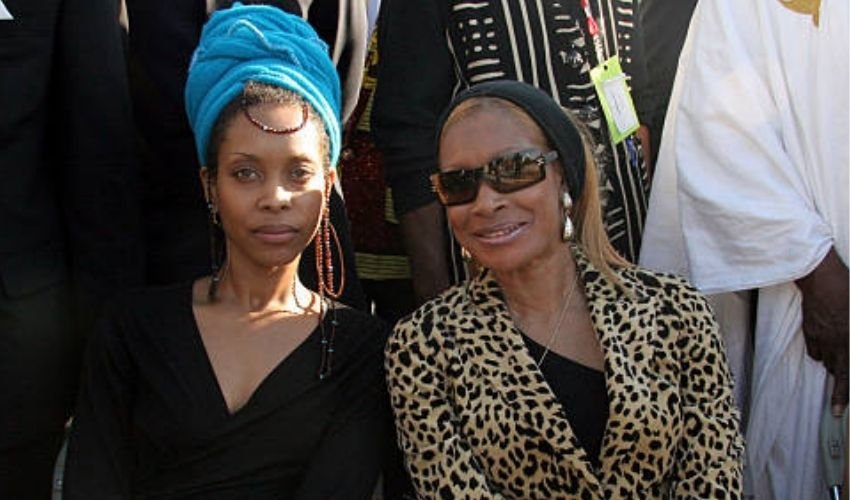

Before Erykah Badu became a Grammy-winning artist with a sound that changed modern soul, she was a child growing up around women who understood art. One of those women was her mother, Kolleen Maria Gipson, also known in public sources as Kolleen Wright. Kolleen is not widely known as a celebrity in her own right, but her place in Badu’s early life matters.
Biography.com describes Erykah Badu as being raised by her actress mother, Kolleen Maria Gipson, and says Badu was exposed to the arts early in life. That small fact opens a bigger story. It shows that Badu’s creative world did not start on a record label, a stage, or a magazine cover. It started much earlier, inside a home where performance already had meaning.
A Mother Connected to Performance
Kolleen Maria Gipson’s public story is limited, so it must be handled with care. There are not many long interviews, personal records, or detailed profiles about her. Still, reliable music and biography sources agree on one key point: she had a connection to acting and performance. Pitchfork notes that both Badu’s mother, Kolleen Wright, and Badu’s grandmother were actresses.
This matters because children often learn from what they see before they understand what they are learning. If a child sees adults perform, rehearse, speak with expression, and treat creativity as normal, that child may grow up seeing art as part of daily life. For Erykah Badu, that early setting helped create the space where her own voice could begin to form.
Art Was Not a Distant Dream
For many children, art feels far away. It belongs to television, theaters, singers, or people with special access. In Badu’s childhood, art seems to have been closer than that. Sources describe her as being exposed to performance from an early age, and some accounts say she began performing when she was still very young.
Encyclopedia.com states that Badu began her performing career at age four when she shared the stage with her mother, actress Kolleen Wright. That detail is powerful because it shows a mother doing more than giving advice. Kolleen appears in the story as someone who helped make the stage less frightening. A child who stands near her mother in a performance space can begin to see art as something real, possible, and close.
The Power of a Creative Home
A creative home does not always need expensive tools. It does not need fame, luxury, or famous guests. Sometimes it only needs adults who speak, sing, act, dress, think, and move with imagination. Kolleen Maria Gipson’s influence can be understood in that way. Her daughter later became known for a style that mixed soul, jazz, hip-hop, theater, fashion, and spiritual language.
That kind of style rarely comes from one simple source. It often grows from many small lessons. A mother who acts may teach timing. A grandmother who performs may teach presence. A house full of women may teach rhythm, memory, and strength. Kolleen’s role matters because she was part of the first creative world Erykah Badu ever knew.
Erykah Badu’s Early Artistic Path
Erykah Badu, born Erica Abi Wright, grew up in Dallas, Texas, and later became one of the most recognized voices in neo-soul. Biography.com notes that she performed at the Dallas Theater Center and later attended the Booker T. Washington High School for the Performing and Visual Arts. These later steps are important, but they do not erase the home influence that came before them.
Schools can train a gift, but family often helps wake it up. Kolleen Maria Gipson’s presence gave Badu an early example of a woman connected to art. That example may have made formal training feel like a natural next step, not a strange new world. In that sense, Kolleen helped build the bridge between home and stage.
A Family of Women, Not Just One Influence
Kolleen was important, but she was not the only woman shaping Badu’s early life. The New Yorker wrote that Badu was brought up by her mother, Kolleen Wright, along with her godmother and two grandmothers. The article described this as “four mothers altogether,” with Badu joking that it could be five if Mother Nature was included.
This image is meaningful. It shows a childhood shaped by a circle of women, not by one simple influence. Kolleen Maria Gipson stood inside that circle as Badu’s mother, but the larger family structure also helped form Badu’s sense of identity. Her art later carried that same feeling: layered, rooted, feminine, spiritual, and full of memory.
Why Kolleen’s Story Should Not Be Reduced
Many people search for Kolleen Maria Gipson only because she is Erykah Badu’s mother. That is understandable, but it is also limited. Women connected to famous artists are often reduced to one role. They become “the mother of,” “the wife of,” or “the woman behind” someone else. Kolleen deserves a more careful view.
Public information about her is not large, so no article should invent facts about her private life. But the facts that do exist are enough to show that she had her own artistic identity. She was connected to acting. She helped raise a daughter who became deeply original. She belonged to a family culture where performance and female strength were present before fame arrived.
The Mother Behind the Artist’s Confidence
Confidence is not always loud. Sometimes it grows slowly when a child feels allowed to try. Erykah Badu’s later public image is bold, but it also feels natural. She has long been known for unusual fashion, spiritual language, sharp humor, and a strong sense of self. While no one can credit one person for all of that, early family influence matters.
A mother who gives a child room to perform helps build courage. A mother who understands art may also understand that creative children need space, not just rules. Kolleen Maria Gipson’s value in Badu’s story may be found here. She helped create an early environment where expression was not treated as a strange thing.
From Home Lessons to Public Sound
Badu’s music has always felt bigger than standard R&B. Her work blends singing, spoken rhythm, jazz feeling, hip-hop attitude, and theatrical presence. Pitchfork’s review of Baduizm discusses Badu’s early world and notes that both her mother and grandmother were actresses. This detail helps explain why Badu’s performance style feels so visual and dramatic. She does not only sing songs.
She builds characters, moods, and scenes. That kind of stage presence can grow from watching actors understand timing, silence, movement, and voice. Kolleen Maria Gipson’s acting background gives readers a useful way to understand Badu’s artistry. The daughter’s sound may be musical, but part of its power feels theatrical.
The Dallas Roots Matter
It is also important to place Kolleen and Badu’s story in Dallas, not just in the wider world of fame. Badu did not begin as a finished icon. She came from a local environment with schools, stages, family homes, and community influences. Biography.com connects Badu’s early arts exposure to her upbringing and later performance training.
This makes Kolleen Maria Gipson’s role feel even more grounded. She was not simply standing at the edge of a celebrity story. She was part of the local foundation that came before the world knew Badu’s name. That is why this angle works well for an article. It turns the focus away from fame and back toward the early roots of creativity.
A Name With Different Public Forms
Readers may notice that Kolleen Maria Gipson appears under different names in public sources. Some sources use Kolleen Maria Gipson, while others use Kolleen Wright or Kolleen Gipson Wright. Vogue also notes that Badu’s mother is Kolleen and goes by Queenie. These name variations are worth mentioning because they can confuse readers.
They also show why careful writing matters. When public information is scattered, writers should avoid making strong claims without support. The safest approach is to explain that these names refer to the same public family figure connected to Erykah Badu’s upbringing. This helps readers understand the search results without spreading wrong or unsupported details.
The Benefit of Growing Up Around Art
The surprising benefit of Kolleen Maria Gipson’s story is not fame. It is early exposure. Children who grow up around art may learn important life skills before they ever choose a career. They may learn how to speak clearly, listen closely, control fear, read emotions, and trust their imagination. Acting can teach discipline.
Music can teach rhythm. Family support can teach courage. Erykah Badu’s later career shows all of these qualities. She became an artist who could move between music, fashion, acting, motherhood, and public conversation. Kolleen’s influence reminds readers that creative roots often begin in ordinary places. A home can become a first classroom. A mother can become a first stage partner.
Why This Story Still Feels Fresh
Kolleen Maria Gipson’s story feels fresh because it is not just another celebrity-parent profile. It is about the way art travels through families. It is about how a mother’s work, habits, and presence can shape a child long before the world is watching. It is also about giving credit without exaggeration. Public sources do not tell us every detail of Kolleen’s life, and that privacy should be respected.
But they do tell us enough to understand her importance. She was an actress. She helped raise Badu. She belonged to a family circle that made creativity part of life. That is a meaningful legacy, even without a long public record.
Final Thoughts
Kolleen Maria Gipson helped shape Erykah Badu’s creative roots by making art feel close, normal, and possible. Her story is not about chasing fame. It is about early influence, family strength, and the quiet power of a creative home. Before Badu became a major voice in soul music, she was a child watching, listening, learning, and performing near women who knew the value of expression.
Kolleen’s role in that story deserves respect because it shows how artists are often formed long before their first hit song. A mother’s example can become part of a daughter’s voice. In Erykah Badu’s case, that voice went on to reach the world.