
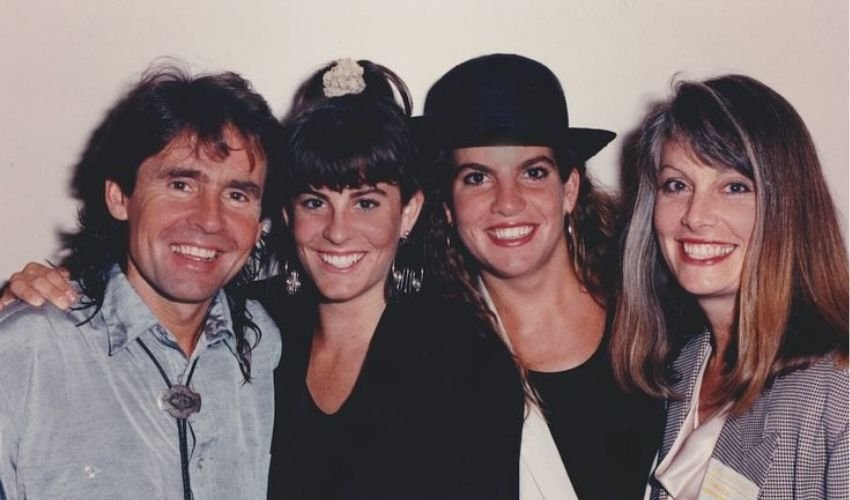

Talia Elizabeth Jones was born into a family name that millions of music fans already knew. Her father, Davy Jones, was not just a singer on a stage. He was one of the most loved faces of The Monkees, a television and music act that became a huge part of 1960s pop culture. That kind of fame can make a family name feel public, even when the child herself did not ask for attention. This is why Talia’s story should be told with care. She is connected to a famous father, but she is also a private person whose life should not be turned into gossip.
Davy Jones became known around the world after The Monkees debuted on television in September 1966. His official biography says the show ran for two seasons, won Emmy Awards, and helped make the group household names. It also says Davy married Linda Haines in 1968 and that by 1971 they were parents to two daughters, Talia and Sarah. These facts place Talia Elizabeth Jones near a very loud time in entertainment history. Her early family life began beside the noise of fame, touring, fans, records, cameras, and public attention.
A Child Near a Pop Culture Storm
To understand Talia Elizabeth Jones, readers first need to understand the world around her father. The Monkees was not a small project. It was a TV show, a band, a comedy idea, and a pop brand at the same time. Davy Jones stood out because of his charm, stage training, and young British image. Biography.com says the group quickly scored hits such as “I’m a Believer,” “Pleasant Valley Sunday,” and “Daydream Believer,” while their albums sold millions of copies. That level of success created a strong fan culture around Davy.
For a child, fame in the family can be strange. It can bring comfort, travel, and opportunity. It can also bring pressure. A famous parent is shared with the public in a way other parents are not. Fans feel close to the performer. Reporters ask questions. Old interviews and photos keep returning. Even years later, people search for the children because they want to know more about the star. Talia Elizabeth Jones became part of that search interest because of her father’s place in music history.
Davy Jones Before Fatherhood
Davy Jones’ fame did not appear from nowhere. Before The Monkees, he had already worked as a young actor. His official biography says he performed as the Artful Dodger in Oliver! in London and on Broadway, where he earned a Tony nomination. It also notes that he appeared on The Ed Sullivan Show on February 9, 1964, the same night The Beatles were introduced to American audiences. That detail matters because it shows how early Davy entered the world of major public performance.
By the time Davy became a father, he already knew what it meant to live in front of people. He had been a child performer, a stage actor, a TV star, and a teen idol. That background may help explain why the story of Talia Elizabeth Jones is not only about being the daughter of a celebrity. It is also about being born into a family where performance, public attention, and entertainment work were already normal parts of life.
The Monkees Fame Machine
The phrase “fame machine” fits The Monkees because the project moved fast. The show mixed music, comedy, and youth culture. Davy Jones, Micky Dolenz, Michael Nesmith, and Peter Tork were placed in front of a young audience that wanted fun, style, and songs. The official Davy Jones biography says the Monkees toured the world from 1966 to 1971 and had three number-one singles and four number-one albums. That means Davy’s public life stayed busy during the same years his family was growing.
For Talia Elizabeth Jones, this creates the main emotional angle of the article. She was not simply connected to fame after it was over. She was connected to a father who was living through the rush and aftershock of one of pop music’s most famous television bands. A child in that position does not choose the spotlight, but the spotlight still touches the home.
Why Talia’s Story Should Stay Respectful
Many celebrity-child articles make the same mistake. They treat private relatives as if they owe the public a full life story. That is not fair. Talia Elizabeth Jones is searched online because her father was famous, but that does not mean every part of her life should be open for public display. A strong article about her should focus on verified facts, family context, and the bigger meaning of growing up near fame.
This kind of writing is better for readers too. It avoids fake claims. It avoids guessing about personal feelings. It avoids turning a real person into a rumor. The most useful article can say: here is what is publicly known, here is the cultural world around her father, and here is why her story matters. That gives value without crossing a private line.
Being Known Through a Famous Parent
Talia Elizabeth Jones is often introduced through Davy Jones. That is understandable, but it can also be limiting. When a person is mainly described as someone’s daughter, wife, husband, or child, their own identity becomes smaller in the public eye. This happens often in celebrity families. The public remembers the famous name first, and the private relatives become side notes in that larger story.
A thoughtful article can address this directly. It can explain that Talia’s connection to Davy Jones is the reason many readers search her name, but it should not be used to invent a public personality for her. Her life shows a common truth about celebrity families: fame does not belong only to the performer. It can spread outward to relatives who may never have wanted public attention.
The Family Side of Davy Jones
Davy Jones was known to fans as a singer, actor, and teen idol. But his official biography also describes him as a father and grandfather who kept working, dreaming, and staying close to fans. This adds warmth to the story. It reminds readers that the public image was only one part of his life. Behind the concerts and TV appearances, there was also a family.
Talia Elizabeth Jones helps readers see that side of Davy Jones. She is part of the personal story behind the performer. Fans may know Davy’s songs, his smile, and his role in The Monkees, but family details remind them that famous people also have private lives. They have children, relationships, home responsibilities, and personal chapters that do not always fit neatly into entertainment headlines.
Growing Up Beside Fans and Fame
Davy Jones attracted strong fan attention because he was seen as charming and boyish. Biography.com notes that audiences adored the humor of The Monkees and that Jones drew special attention from fans because of his charm and looks. For a family, this kind of attention can be unusual. A father may be loved by strangers everywhere, but at home he is still a parent.
That contrast makes Talia Elizabeth Jones an interesting article subject. Her story sits between two worlds. One world is public, bright, noisy, and full of music history. The other world is private, family-based, and mostly unseen. Good writing can explore that contrast without pretending to know private emotions. It can ask readers to think about what it means when a parent belongs partly to the public imagination.
The Benefit of a Privacy-First Story
A privacy-first article can still be interesting. In fact, it can be more interesting because it feels honest. Instead of repeating thin facts or copying the same short biography, the article can explore a deeper theme: how children of famous people live beside a legacy they did not create. Talia Elizabeth Jones is a good subject for that kind of article because public information about her is limited, but the cultural setting around her father is very clear.
This approach also protects the article from weak SEO writing. Search engines and readers both prefer useful content. A page that only says “Talia is Davy Jones’ daughter” again and again does not help much. A better article explains the family context, the Monkees era, the pressure of inherited fame, and the need for respectful public writing. That gives the reader a fuller answer.
A Name Tied to Music History
The name Talia Elizabeth Jones is tied to a larger music story because Davy Jones remains part of pop culture history. The Monkees did not disappear after the 1960s. Their music continued to reach new listeners through reruns, reunions, records, and nostalgia. Biography.com notes that interest in the group returned in the 1980s when reruns aired on MTV and the band reunited for concerts. This meant Davy’s fame did not stay locked in one decade.
For family members, that kind of lasting fame can keep the public curious for many years. Even after a performer dies, fans continue to search, read, and remember. Davy Jones died in 2012, but his work still brings people to stories about his life and family. Talia Elizabeth Jones remains part of that wider interest because she is connected to his personal legacy.
What Readers Can Learn From Her Story
The story of Talia Elizabeth Jones can teach readers something important about fame. It shows that celebrity is not only a career condition. It is also a family condition. When one person becomes famous, relatives may become searchable names. Their privacy can shrink, even if they live ordinary lives away from cameras. That is why writers must be careful.
A strong article should not promise secrets. It should not claim to know private memories. It should not create drama where no verified drama exists. Instead, it should use Talia’s public connection to Davy Jones as a way to talk about family, legacy, and the human side of fame. That makes the story more respectful and more useful.
Why This Angle Works for 2026 SEO
This angle works well for SEO because it answers search intent without becoming a shallow celebrity profile. People searching “Talia Elizabeth Jones” likely want to know who she is and how she is connected to Davy Jones. The article can answer that clearly. She is publicly known as one of Davy Jones’ daughters from his marriage to Linda Haines. The official Davy Jones biography confirms that Davy and Linda had two daughters, Talia and Sarah, by 1971.
But the article should go beyond that simple answer. It should explain why her name appears in searches, why Davy Jones’ fame still matters, and why private relatives should be treated with care. That gives readers context. It also makes the content feel original instead of copied from other short biography pages.
Final Thoughts
Talia Elizabeth Jones’ story is not about chasing fame. It is about being born beside it. Her father, Davy Jones, lived through one of the most recognizable pop culture moments of the 1960s as part of The Monkees. His music, television work, and teen-idol image made him a public figure for life. Talia’s name became connected to that history because she was part of his family.
The best way to write about Talia Elizabeth Jones is with balance. Use the verified facts. Explain the Monkees fame machine. Show the family side of Davy Jones. But do not invent private details. A respectful article can still be rich, emotional, and SEO-friendly. It can help readers understand not only who Talia Elizabeth Jones is connected to, but also what her story shows about fame, family, and privacy.


